0

The Man Ray Dossier

The Man Ray Dossier

Following the exhibition 'Cineast and Sculptor', curator Dick van Broekhuizen wrote an extensive dossier on Man Ray and his work.

Half Beard

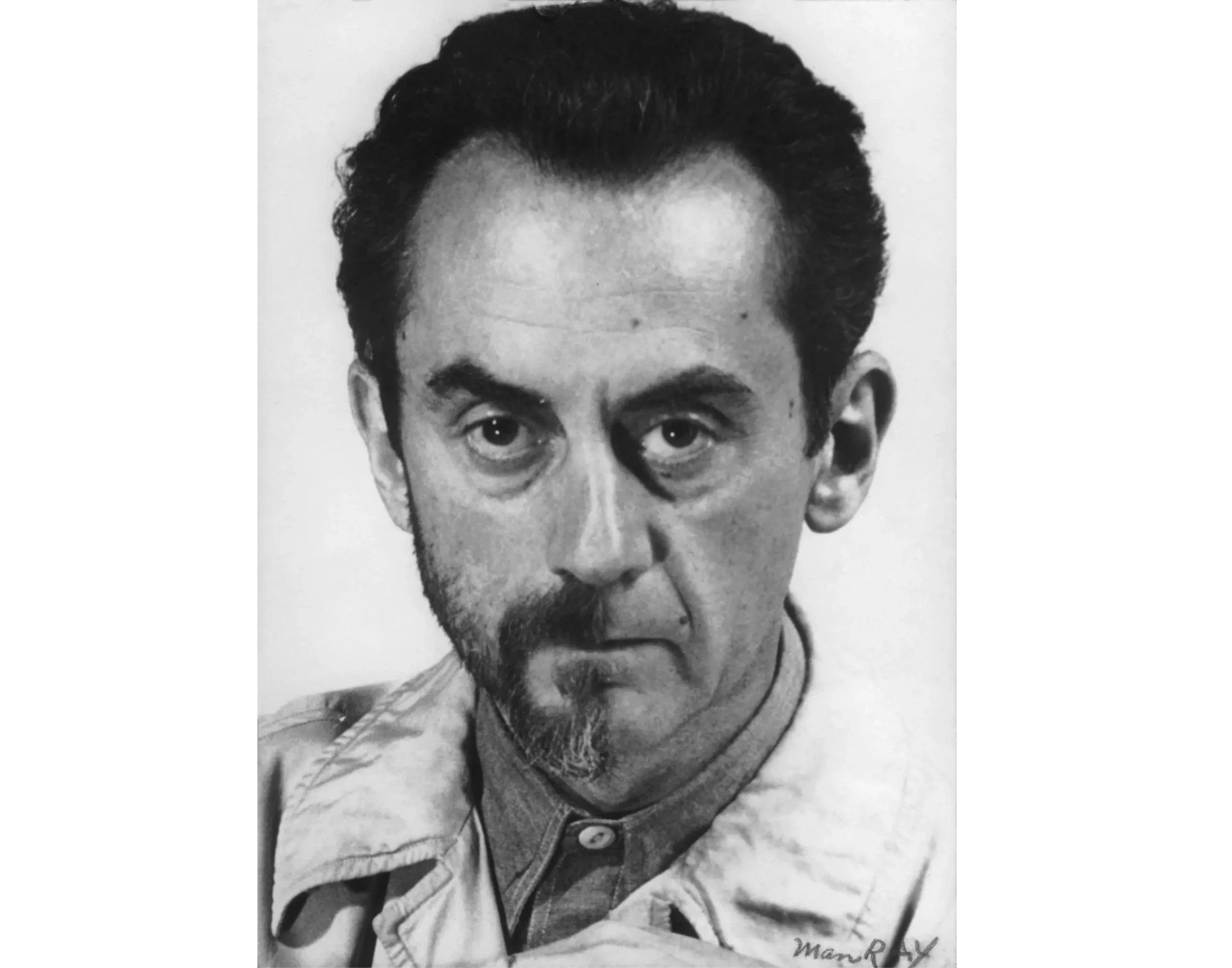
Sometime in the 1940s, the artist, filmmaker, and photographer Man Ray decided to grow a beard. Not everyone around him considered that this was a good choice; he received mixed reactions. Man Ray solved this problem by shaving off half of his beard, so that one half of his face was clean-shaven and the other half was bearded, as he himself said: “one half for those who prefer my face with a beard, the other half for those who prefer it without.” 1

Half Beard

Man Ray had a complex personality and was a multifaceted artist. This self-portrait with a half beard reflects that complexity. The photograph has a somewhat defiant and absurd quality and can therefore be read as a representation of his Dadaist–Surrealist artistic practice. At the same time, the photograph also represents an anecdote from Man Ray’s real life. According to art historian Kim Knowles, he had to balance many different points of view and media, as well as relationships and his life history.

Man Ray was an American, but his family originally came from Russia. He felt most at home in Paris, but also worked in New York. His real name was Emmanuel Radnitzky, but he worked under the name by which he would become famous: Man Ray. He employed various art forms and media, such as photography, sculptural objects, and film. Sometimes he was the author of his films; at other times he was listed only as the cameraman. He was a man of contradictions and dualities.2

Biography

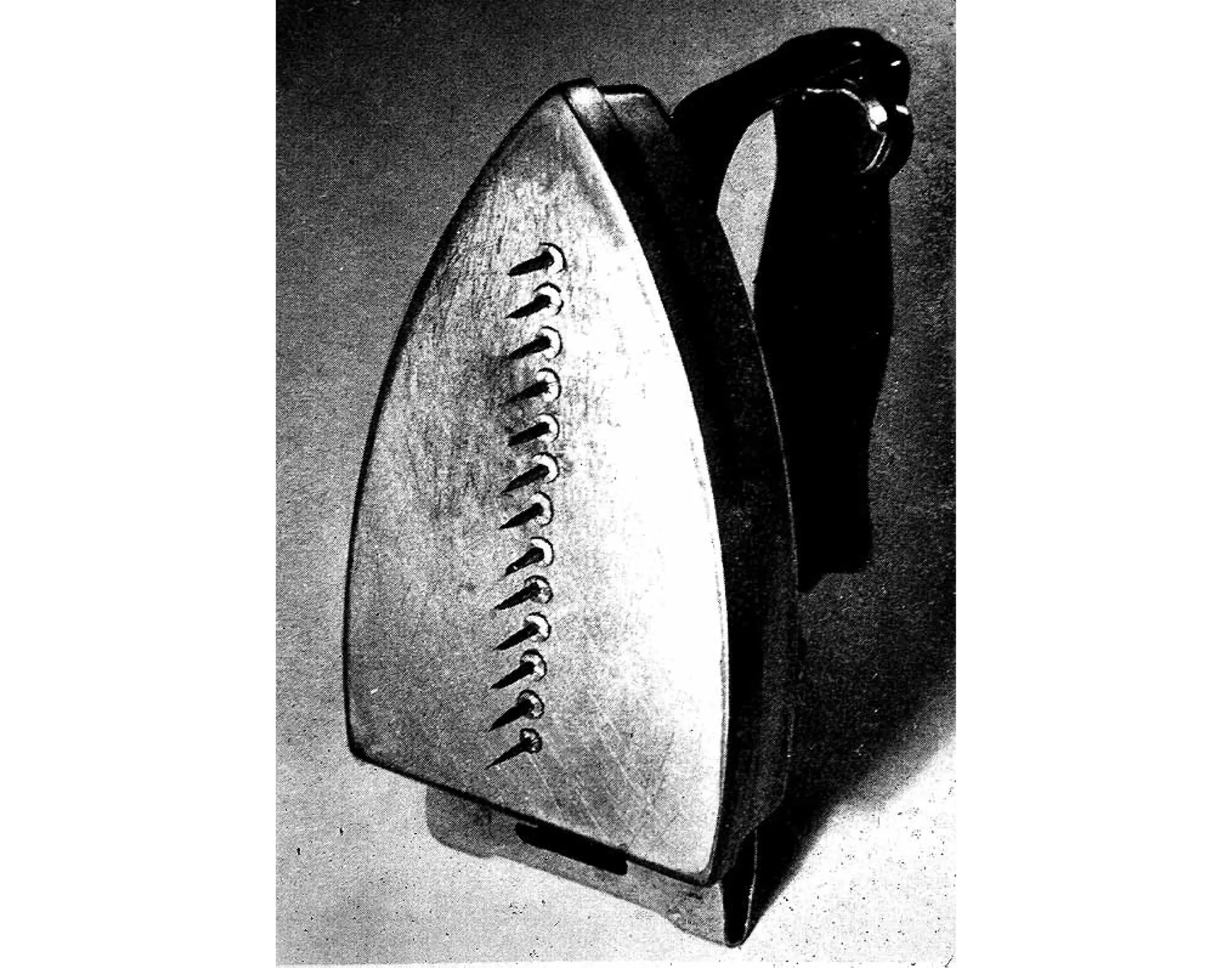
Man Ray (1890–1976) grew up in New York.3 He studied architecture and engineering studies, but also received artistic training. He began using his pseudonym Man Ray in 1911. After meeting other artists, most notably Marcel Duchamp, Man Ray also began creating readymades: objects that, with a few modifications, acquired a Dadaist or Surrealist meaning. A well-known example is his iron with nails welded to the soleplate, Cadeau, from 1921.

Man Ray was also involved in photography and film. In the 1920s, he made four short films, which have become part of the canon of cinema development. 

Biography

In photography, in addition to using a camera, he also made photograms, camera-less images created by exposing light-sensitive material. He also used these images, which he called Rayographs, in his films. Man Ray also published in Harper's Bazaar, Vu and Vogue.

In the 1940s, he returned to Los Angeles in the United States to escape the German occupation of Paris. After the war, in 1946, he returned to Paris. He would continue to work there until his death in 1976.

Relation ships

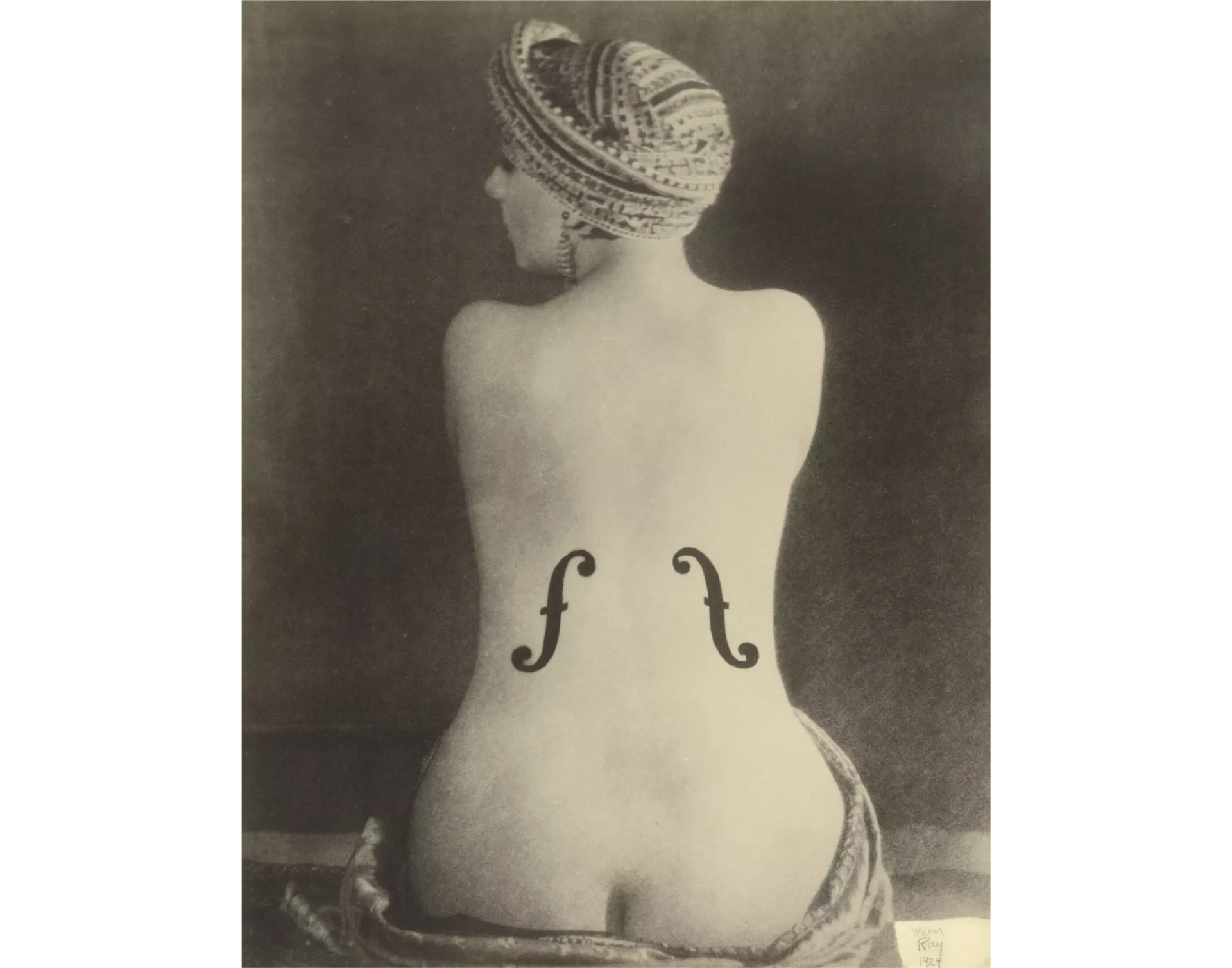
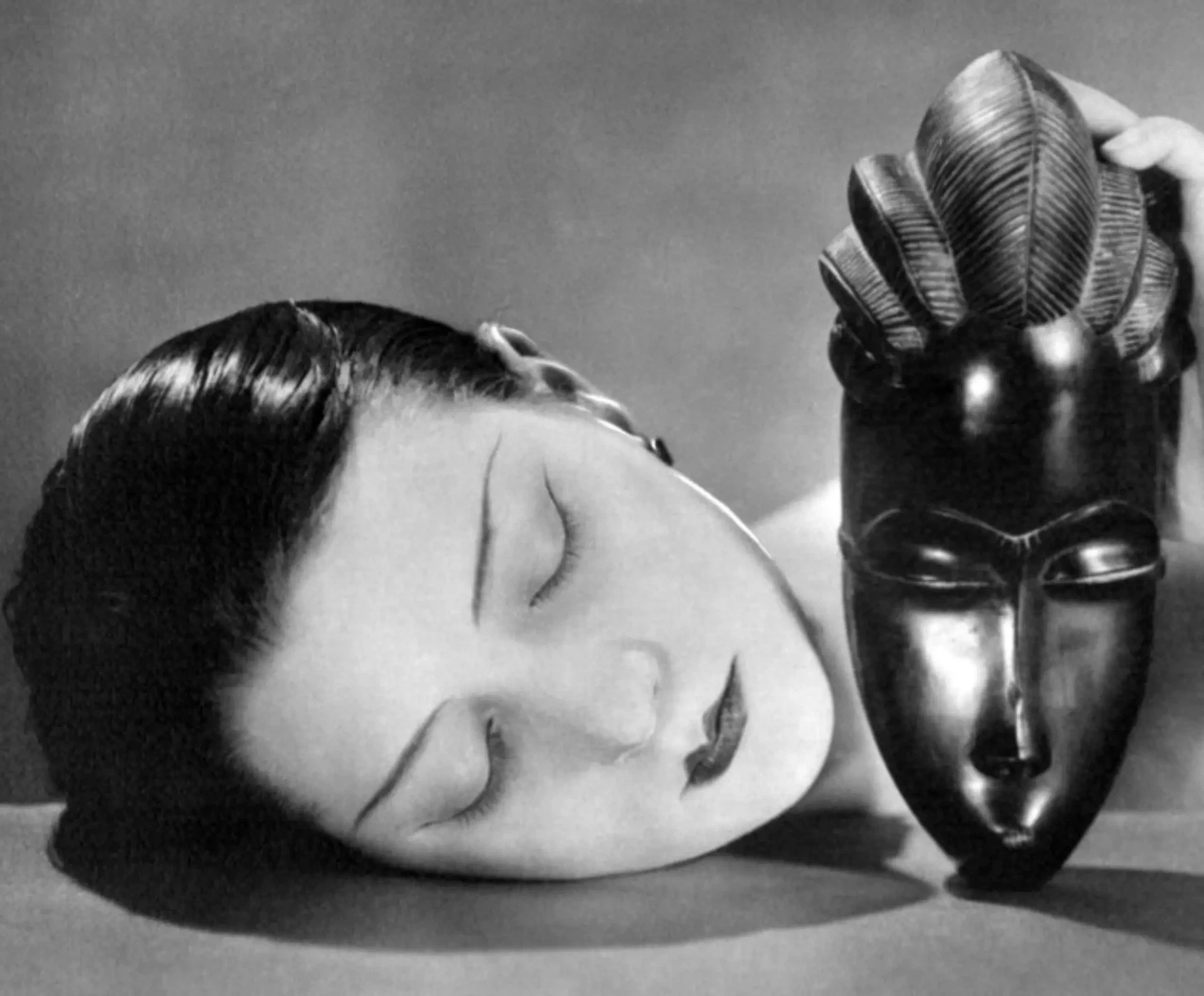
In the 1920s, Man Ray began a relationship with Kiki de Montparnasse (1901–1953).4 She did not adhere closely to the moral conventions of her time and was independent and free in her sexuality.5 The Violin of Ingres (1924) is a remarkable portrait of Kiki. She is shown from behind, photographed as a nude in the manner of Ingres. During the printing process, Man Ray added two violin f-holes to her back, thus transforming the body into a musical instrument.

Relation
ships

Man Ray and Kiki de Montparnasse were in a relationship from 1921 to 1928. Historian Mark Braude has described the relationship between Kiki and Man Ray as more than just a love affair. In retrospect, Kiki can be seen as one of the driving forces behind the Parisian avant-garde, in which artists closely associated with one another and sought to outdo each other in terms of modernity and creativity.6 Modigliani, Duchamp, Picasso and others were all acquainted with Man Ray and with Kiki de Montparnasse and her preferred medium: performance. Unfortunately, the performative art form through which she expressed herself has not been preserved.7 As a result, she has received little recognition for her influence on this art scene.

Hermaphrodite

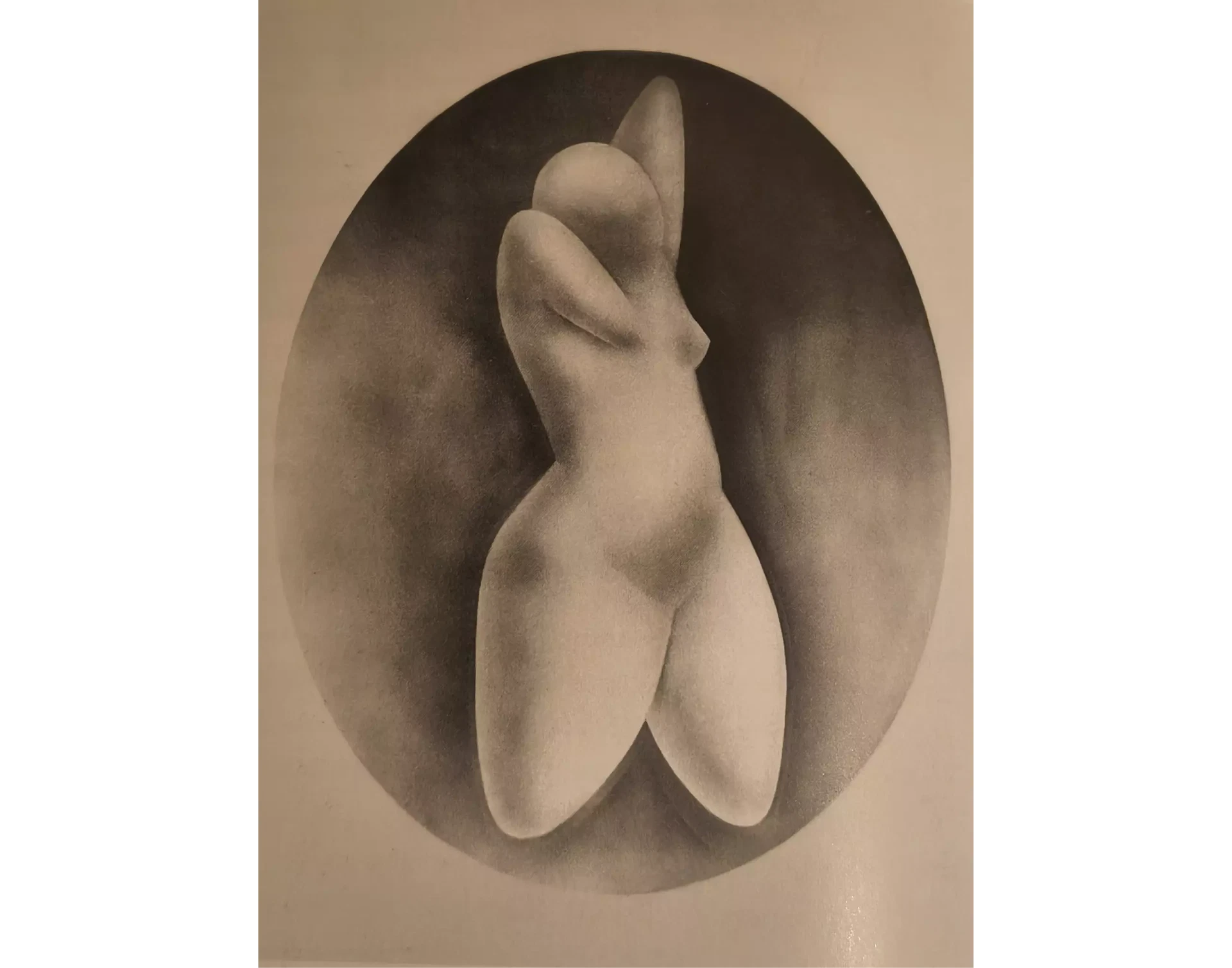
Man Ray began experimenting with industrial drawing techniques around 1918–1919. For example, he used an airbrush for the drawing Hermaphrodite in 1919. 8

It was not until 1975 that he created a sculpture with the same theme and the same forms as those of the 1919 print. This work was executed in marble. Several editions of bronze casts were produced shortly thereafter. At times, the sculpture is placed on a cushion; at other times, it is displayed upright on a block, in accordance with the print.

Hermaphrodite

The hermaphrodite is a dual-sexed human figure, named after the Greek god Hermaphroditus, the child of the messenger god Hermes and the goddess of love Aphrodite. As such, it is a child of reason and love, bringing together all oppositions within a single body.

The sculpture itself is an abstraction rather than a literal representation of dual sexuality. The sexual characteristics are only faintly visible. The human body depicted—essentially an extended torso—admits of a dual interpretation. The sexuality portrayed is not erotic but fluid. The body is not intended for reproduction; instead, the human body is presented as a form in which both the self and the other can be recognized.

The dating of this depiction is remarkable: one of the earliest experiments in his body of work from 1919 is the same Hermaphrodite as one of the final objects in his oeuvre, the sculpture from 1975. It appears this work embraces his entire artistic career within a single arc. The unifying aspect of the Hermaphrodite—reason and corporeality—may be the reason why Man Ray chose to produce this sculpture so late in his career.

In some way, the photograph of Man Ray with his beard shaved off and the Hermaphrodite are closely connected: two opposites united in a single image, condensed within one body. This can result in Dadaist or Surrealist imagery, or, expressed in a less sharp or dialectical manner, a synthesis that is more than the sum of its parts.

FILMS

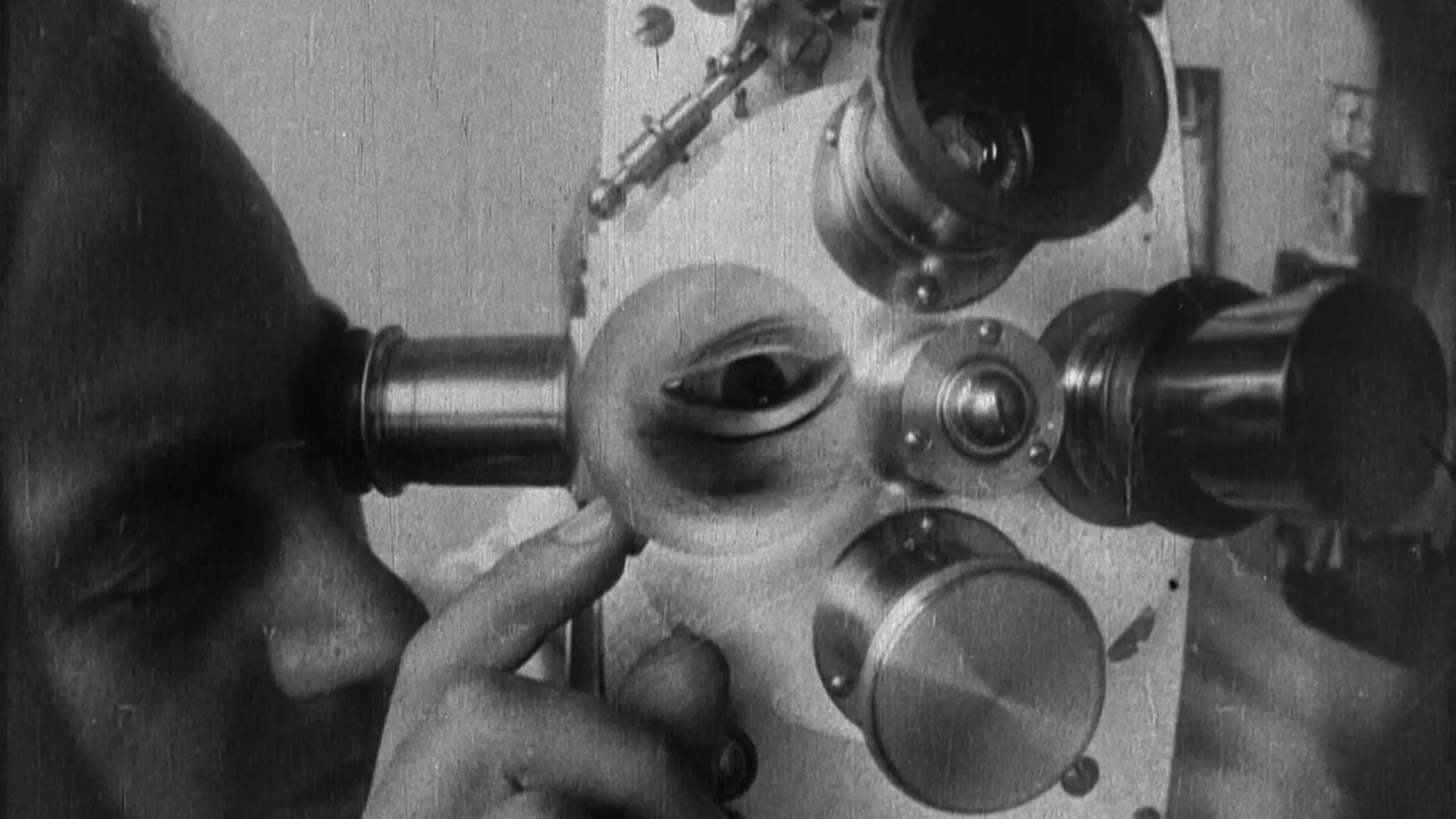
Man Ray was of invaluable importance to the development of film.9 He experimented with this relatively new medium. In films such as Emak Bakia and Retour à la Raison, his formal experimentation is highly radical. Images placed side by side have a suggestive effect, yet a plot or continuous narrative is sometimes difficult to discern. These films must be experienced rather than interpreted literally or understood as mythical collages.

FILMS

Just as he created his photographs and artworks by bringing together extremes, he applied the same principle to his films. The mechanism through which films are made—the camera itself—is sometimes present within the film. The question of reality and the registration of the world around us—can this notion be considered valid for film and photography? Man Ray instead reveals the underlying mechanisms and processes of filmmaking.

Man Ray also employs camera-less techniques, such as rayography. Although the resulting images may appear unreal, they are in fact traces of objects on light-sensitive material, such as a strip of film scattered with objects and then exposed to light. The human body is presented as a projection surface onto which images are cast, allowing multiple images to be recorded simultaneously. Negative imagery and double exposure—Man Ray shies away from nothing in order to make his films as expressive and distinctive as possible.

In this way, an atmosphere of ghosts and shadow worlds is evoked: a realm that is never fully visible. Filming through frosted glass or textile gauze creates obscurity, blurring, and a sense of the unknowable. In other words, the viewer is invited to fill in the gaps, to participate intellectually, and to complete the suggestion.

Man Ray is the creator of a complex visual world that has an artificial quality. He is not content with merely observing everyday reality; instead, he transforms it through the many interventions he employs. He is an artist of extremes, which he unites within a single work of art. This dialectic—the synthesis of everything that moves within him and within us—is what he seeks to express, sometimes without fully knowing what he is doing, or by allowing his subconscious to speak.

Reference list

1. (Knowles 2012, page 77) “Un côté avec barbe pour ceux qui préféraient avec. Un côté sans, pour ceux qui préféraient sans”.

2. Man Ray appears as a character in the 2025 VRT series about Surrealism, framed as an entertaining but entirely fictional murder mystery.” This is not a murder mystery: https://www.vrt.be/vrtmax/artikels/2025/10/22/wie-is-man-ray-in-this-is-not-a-murder-mystery/

3. Based on Britannica Online; Britannica Academic, s.v. ‘Man Ray,’ accessed December 22, 2025, https://academic-eb-com.leidenuniv.idm.oclc.org/levels/collegiate/article/Man-Ray/62816.

4. Catel & Jose-Luis Bocquet, Kiki de Montparnasse, London, Self Made Hero, 2022. A graphic novel about the life of Kiki.

5. https://www.cultureelerfgoed.nl/actueel/weblogs/kunstwerk-van-de-maand/2023/de-rug-van-kiki-man-ray-1924

6. https://news.artnet.com/art-world/kiki-de-montparnasse-man-ray-biography-2238009

7. Mark Braude, Kiki Man Ray. Art, Love and Rivalry in 1920s Paris, New York, Norton, 2022.

8. In Bourgeade, Pierre, Bonsoir, Man Ray. Montroughe, France, Fondation Maeght, 2002.

9. Fotiade, Ramona. ‘Spectres of Dada: From Man Ray to Marker and Godard’. In Dada and Beyond, Volume 2, 89-106. BRILL, 2012.