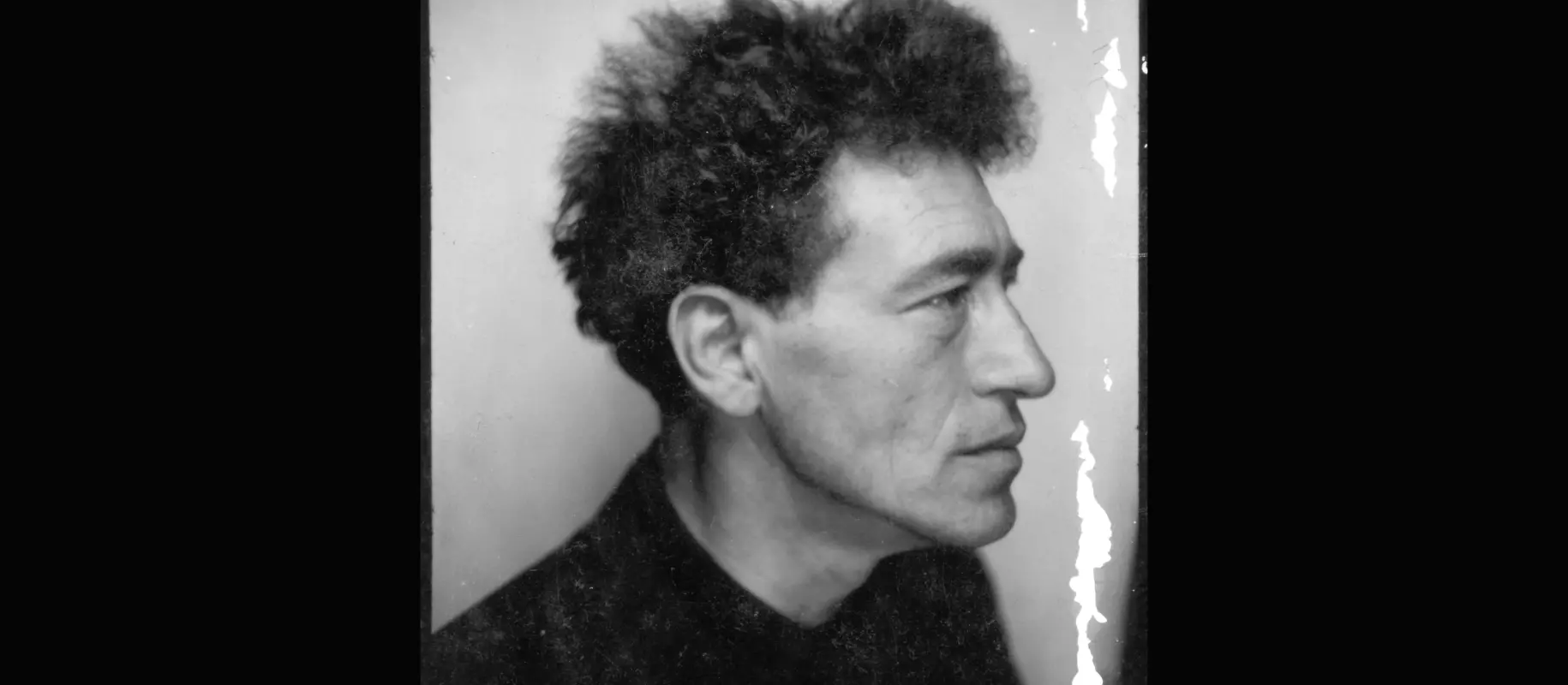
Alberto Giacometti
Alberto Giacometti studied drawing, painting and sculpture briefly in Geneva and then in Paris. Soon he departed from the academic approach, as he became more and more interested by Cubist sculpture and non-western art forms, eventually joining the Surrealist group. From his modest studio in Paris, the artist collaborated with the Surrealists until he was expelled from the group in 1935 due to his renewed focus on modelling from direct observation.
Progressively during and after the Second World War, Giacometti elaborated smaller and thinner that led to his famous slender, solitary figures, which mirror the conflict and alienation of that time. The insignificance of man is powerfully expressed in his thin, elongated forms that seem to dissolve into space. These figures, which are simultaneously present and absent, convey a feeling of loneliness and existential uncertainty. Giacometti attempted to make the elusive feeling of human presence and inner life tangible. His paintings and drawings are also evidence of this ongoing quest, through which he created an exceptional body of work that continues to inspire to this day.